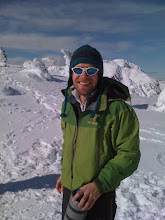
Yesterday afternoon, before evening even arrived, the dew dropped like it hasn't all year. The tools I was working with clouded over, metal turned cold to the touch. Sandhill cranes arrived flock after flock on their way to places like Arizona, dropping out of the sky with long legs dangling. It was the first day that felt solidly of fall. Moose season opened yesterday, but Ian and I are gearing up for caribou instead. We'll leave this afternoon and drive north with oversized sleds and a canoe, look for caribou somewhere north of the Brooks Range, then hike the mandatory five miles from the road over tussocks, maybe lining a canoe up a creek. Sometimes there are specific things one learns hunting, but mostly it is senses of things, built up over time -- how close you can get to an animal before it spooks, whether it is smell or sight or something else they find most frightening. One also learns how to think about hunting. Last year we saw thousands of caribou and came home with nothing; other years have been more lucky. And while veteran hunters probably have the right to credit skill over luck, it would be foolish to think you are in control. The best you can do is prepare, put yourself in the right spot, and wait, and there's something wonderful in that.
Friday, September 2, 2011
fall
Yesterday afternoon, before evening even arrived, the dew dropped like it hasn't all year. The tools I was working with clouded over, metal turned cold to the touch. Sandhill cranes arrived flock after flock on their way to places like Arizona, dropping out of the sky with long legs dangling. It was the first day that felt solidly of fall. Moose season opened yesterday, but Ian and I are gearing up for caribou instead. We'll leave this afternoon and drive north with oversized sleds and a canoe, look for caribou somewhere north of the Brooks Range, then hike the mandatory five miles from the road over tussocks, maybe lining a canoe up a creek. Sometimes there are specific things one learns hunting, but mostly it is senses of things, built up over time -- how close you can get to an animal before it spooks, whether it is smell or sight or something else they find most frightening. One also learns how to think about hunting. Last year we saw thousands of caribou and came home with nothing; other years have been more lucky. And while veteran hunters probably have the right to credit skill over luck, it would be foolish to think you are in control. The best you can do is prepare, put yourself in the right spot, and wait, and there's something wonderful in that.


Monday, July 25, 2011
talkeetnas


 Near the end of our 15-day hike, James, explaining some lack of equipment or maybe physical preparation, remarked, "I thought this was going to be a river trip." I laughed, because it seemed like a gentle way of saying, "What did I sign up for?" We'd endured near-constant rain and clouds, soggy feet, slippery rocks, and miles of tough bushwhacking -- the kind of challenges that can wear on you, but also make you feel you've survived, make you appreciate the sun even more. In the end, I don't think any of us would have traded our trek for anything.
It had, in fact, started as a river trip -- maybe a float in ANWR, or a hike-float combo through Gates of the Arctic (there are so many choices in Alaska). In the end, Toby and Darcy proposed something closer to Anchorage, with fewer bugs and no costly fly-ins, but still awesome. We started on the Glenn Highway and hiked 140 miles through the Talkeetna Mountains to the rail line northeast of Talkeetna, off the Parks Highway. We followed Jeep roads for the first day and a half and found some old tracks again on the last day, but in between, we followed only caribou trails -- up this valley, over that pass and down again. We watched caribou float over the tundra and a grizzly bear devour a caribou calf. We picked our route based on the elevation lines of topo maps.
For three days, we made camp in a high valley near even-higher peaks where a bush pilot had formed a crude runway by placing white rocks in a straight line on a patch of tundra. A pilot flying a two-seater with tundra tires brought us food, fuel, beer and wine, which we bundled at night in a contractor bag swollen like Santa's sack. The sun came out and we climbed a 7,300-foot peak with spectacular views of mountains and glaciers. Awesome indeed. (Read Darcy's account and see more pictures here.)
From our pilot, we learned that NOLS makes a trip through the Talkeetnas each summer. Toby, from whom I have learned a great deal about wilderness travel, scoffed at the idea of paying for such skills, and I think it irked him to imagine that our trip was not unique. (After Day 2, we saw no one but our pilot.) So for the rest of the trip, we joked about those NOLS kids -- how they could always light a fire with one match, how they were expert bushwhackers who never complained about the weight of their packs.
Today there's a story in the paper about a bear attacking the NOLS group, seriously injuring two. It sounds like they might have run, which is a no-no, but also did things right, like making lots of noise. It's hard to know what to think. It's only the second bear attack in NOLS history, according to the story, so maybe there's comfort in the odds. No matter how prepared you are, with bear spray or firearm, I imagine there's always some risk -- a trade, I guess, for the opportunity to experience places as wild as this.
Sunday, March 20, 2011
clamming


 Big moon, very low tide. I wish I knew enough about the workings of this planet and moon to know if they were related. In any case, the monthly extreme low tides around Juneau happened this weekend, a nice minus 3 feet or so, so Jesse and I joined some friends to dig for clams. I'll take full credit for getting us there a little late, around 7:45 this morning. It's Sunday! There were at least a half-dozen cars and trucks already at the pullout. We spent about an hour digging in the mud, moving over rocks, trying to avoid getting squirted in the eye by a leggy worm or a big clam. Some are duds -- shells filled with rocks and sand. Some break when you dig for them. If you're not too picky, you can fill a 5-gallon bucket in not too much time. We stopped digging when the tide came in. Tonight we'll steam the little guys in white wine and garlic, put the bigger ones in saltwater with cornmeal to filter the sand from them.
Tuesday, July 27, 2010
boat soup


 I've been working, for sure, but somehow yesterday felt like the first big day of building. It didn't rain, my chisel was sharp, and the need to get going somehow seemed more apparent. (The bigger the project, the longer the rush to deadline?) I finished cutting and shaping my floor joists, made more sawhorses, souped up my mailbox post, and cut a joist pocket in a sill.
The sense of urgency comes partly from the same thing that motivates every Alaska builder – the desire to not get caught without a roof when it gets cold – and partly because I’m timberframing with white spruce. The wood shrinks a lot when it dries, and tends to twist. The best would be to cut it all immediately after it’s milled and get the frame up before the timbers dry. The joinery might stop the timbers from twisting. Instead, I have stacks of timbers cut at various times -- from last week to months ago -- at various stages of drying. So I add a strong sixteenth to my joist ends in the hope they’ll shrink to fit. (The sills that will house them have already shrunk.)
It’s nice to think of timberframing as modular, and it can be in some cases. Every brace in the frame should be identical. But sometimes the qualities of each timber, each piece of once-living wood, make customization necessary. A four-by-six joist might be only three and seven-eighths.
Boat soup is a mix of pine tar, linseed oil, and turpentine. It treats boats and outdoor wood without sealing it in varnish or nasty chemicals. The pine tar I have comes from a boatbuilding supply store, but is made for horses: “Wash and dry hoof. Apply below coronet band of hoof and hoof wall. As a hoof pack, apply to bottom of hoof prior to shoeing.” The tar makes the wood dark and sticky. You have to recoat every year or so, and the wood probably won’t last as long as pressure-treated, but that's fine with me.
Thursday, July 22, 2010
moto
 It's a sorry indication of my fitness that my outdoor adventures now come atop a 650cc dirt bike. But then there's nothing really to complain about. Last night, after a long day of rain, the sun came out under giant picture clouds. I motored up Murphy Dome on the old road, turned to slippery mud from the rain. A cloud blew through the trees over the road. I bumped over rocks on a trail to the summit. At the top, maybe 10 o'clock at night, the sun was setting over mountains to the west and north. Cottongrass, Labrador tea, blueberries, dwarf fireweed. A fox scurried down the 4-wheeler trail in front of me. I rode back down the mountain, the air cooling, humid enough to fog my visor and mirrors. I passed the turn to my house and kept riding, to catch just a little more of this late, golden summer sunset that will last only so long.
Sunday, March 21, 2010
juneau, and the next thing
 It's a wonderful thing here in Juneau to be able to walk out your door, maybe with a cup of coffee, and hike from sea level up 2,000 feet till the sun filters through the trees and the water and mountains and snow come into view. It was just a mini-hike I took today, up to the top of the tram on the way to Mount Roberts. I saw three skiers stumbling down in ski boots, and two mountain bikers pushing their bikes up the narrow trail.
I have no good excuse for not blogging, except that I really haven't had much outdoor adventure to write about, and have hardly covered anything related to climate change or the environment. Here at the capitol, discussion of either comes in the form of resolutions against federal climate legislation or concerns over federal Endangered Species Act listings. There is talk, and action, related to renewable energy and conservation -- more than in most states, I believe -- but lawmakers almost never mention environmental benefits when explaining their support for either.
I have spent much of my non-work time planning my next Alaska adventure -- building a small cabin. In February, I bought an acre of land in Fairbanks, on a sloping, mossy, tree-covered lot on the north side of a hill in Fairbanks. It's likely to get no direct sun for at least a few weeks in the winter, but it's above the coldest parts of town, and above the pollution caused by poor air circulation and lots of cars and wood stoves. I don't have a simple explanation for wanting to do it, and now. Or rather, I have several. I miss using my hands, and that part of the brain that looks for creative and elegant solutions to physical problems. I like thinking about the experience of a physical place -- what you see as you walk up the steps to a door, or where the light will be in the evening. I want some kind of home, a place to return to and leave from, but also just a place where I can sink big screws into the rafters and now worry about a landlord or deposit.
Tuesday, October 20, 2009
glaciers, grizzlies, and Alaska's big city


 I have to admit I'm warming up to Anchorage. I still think the city itself is kind of a dump, but the land around it really is amazing -- mountains, glaciers, salt water and fresh water.
On Saturday, Toby took me for a hike up Ram Valley, where neither of us had been, to climb Raina Peak, at 6,795 feet. We parked the car at about 1,400 feet and hiked under a power line, along a narrow road, and up through tall, dead grass and thick alders more suited to bears than humans. After bushwhacking and sidehilling, we popped out in the valley to see a big grizzly eating overripe blueberries 400 yards away. Before he could hear or smell us, the bear dropped to his belly on the tundra in a way that must have been efficient but was not very stately. We chose a path around him and checked over our shoulders as we hiked to see that he hadn't moved. Then he disappeared. We worried he had dropped into alders between us and him, but we kept an eye out and never saw him again.
We hiked steadily up the tundra to a spit of rock coming down from the peak, then followed that up, climbing over rock ridges as necessary to avoid spots that were too steep to climb without ropes. Not having hiked much this year, I got sloppy after a few hours. Footing was hard on the loose rocks. We turned around a few hundred vertical feet from the top. The views were amazing, and even more so because of the quick transition from wooded lowlands to soft tundra and finally to rock, covered only by multi-colored lichen. We half-ran down scree fields and rushed across the tundra to make another friend's birthday party nearly on time.
On Sunday, Toby and Darcy and I set off on another expedition -- to hike and float from Girdwood to Eagle River over Crow Pass and down the north fork of the Eagle River. It's a trip that people do fairly often on foot, I understand, often spending a night or two on the trail. There's also a trail marathon along the route, for which Toby once held the course record. Once again, the hiking was spectacular. We climbed past old mining operations, along short cliffs, and past waterfalls. We paused at the pass and soaked up some sun, then hiked another bit to where we could see a handful of glaciers. We passed mountain goats on the trail, seemingly unafraid.
The trail covers about 13 miles of rock, grass, and fairly thick woods before reaching Eagle River a little below the glacier that gives it life. There wasn't enough water to float, so we crossed the milky, fast water and picked up the trail on the other bank and kept hiking. After a few more streams added their water, we blew up the packrafts we'd carried over the pass and paddled a few miles. Canyon-like walls rose from the glacial valley. A grizzly sow and two cubs lumbered up the bank 100 yards from us.
Our route proved somewhat ambitious, and despite hiking fast all day with little rest, we still had miles to go when we pulled our boats from the river at nightfall. The sun had long since disappeared, and even as we floated, ice formed on our packs and paddles. On the trail, fresh frost glistened back at us from the light of our headlamps. We reached the nature center and road a little before 10. The night was clear, and the stars came out as bright and unpolluted as from my Fairbanks home, maybe even brighter.
Monday, October 5, 2009
yukon fish
Yay! Jesse and I had a story come out over the weekend in the New York Times. It's about the poor runs of king salmon on the Yukon in recent years and how they're affecting people. Be sure to check out the slide show. Both can be found here.
Sunday, September 6, 2009
mighty mighty yukon

 We're done! After 50 days on the river and about 935 miles in the canoe, Jesse and I made it to the ocean on August 31. Against the advice of nearly everyone we met and despite a stern warning from a volunteer with the search and rescue squad in Emmonak, we paddled the last 11 miles to the Bering Sea in a fall storm that kicked up 30 mph winds and threatened to push the surf over the low ground. It took about 6 hours of paddling -- at times so hard we had to grunt -- and large quantities of chocolate, but we managed to get there through wind and waves and even stay dry at our ocean camp. Like most of the trip, the weather proved erratic, and we had a few moments of sun on the first day of September. The beach, if one can call it that, looked something like the Great Plains and something like the Serengeti, or so said Jesse.
Sunday, July 5, 2009
yukon paddle
 For the last several weeks, the floor of my cabin has been cluttered with gear: waterproof totes and bags, buckets, cooking pots and rubber boots, tent stakes, sleeping bags, wool clothes, bug nets. Yesterday I finished making a pair of canoe paddles, cut the handle off my $3 frying pan, and bagged up 145 pounds of food.
In less than a week, I'll be leaving Fairbanks on a five-week paddling adventure down the Tanana and Yukon rivers. If all goes well, we'll make it 900 miles to the Bering Sea before fall storms kick up in mid-August. I'm paddling with a friend from college, a freelance photographer now, and the goal is to do some stories about the trip and how the horrible returns of king salmon are impacting Yukon River villages.
In planning, I've felt a bit like an amateur. What do we do about bears? How long should our painters be? Which is not to say I've never been on a wilderness trip. In 2002, I spent 30 days paddling solo down the Hudson River, and last fall I kayaked the Noatak -- one of the most remote rivers in all of Alaska. But most of the Hudson is settled, and on the Noatak, I relied on experienced companions.
So I've been preparing -- gathering gear, reading, talking with people, paddling. Last week I did a test run of sorts, floating the first 50 miles from Fairbanks to Nenana with my friend Ian. The last time we did it, two years ago, I was newer to Alaska: "There's signs of life, like little marks on trees for fish camps, I'm guessing, and a sign for Skinny Dick's, but mostly the river is wild," I wrote. "Ian likened it to a highway -- it's fairly well traveled, and you can't really get lost -- but I mostly saw it like a big, remote river."
Well, this time was different -- I saw the highway. The current is strong, but manageable, the river braided, but easy to follow. The river feels more like a path through wilderness than wilderness itself. There will be sections of river more than 100 miles between villages, but it all seems doable now with some good gear, paddling skills, and common sense. I think I'm getting that Alaska perspective.
I can't imagine blogging much during the trip, but certainly upon return!
Subscribe to:
Posts (Atom)